
Electronic Signatures: As Legally Valid as Paper Documents, but More Efficient
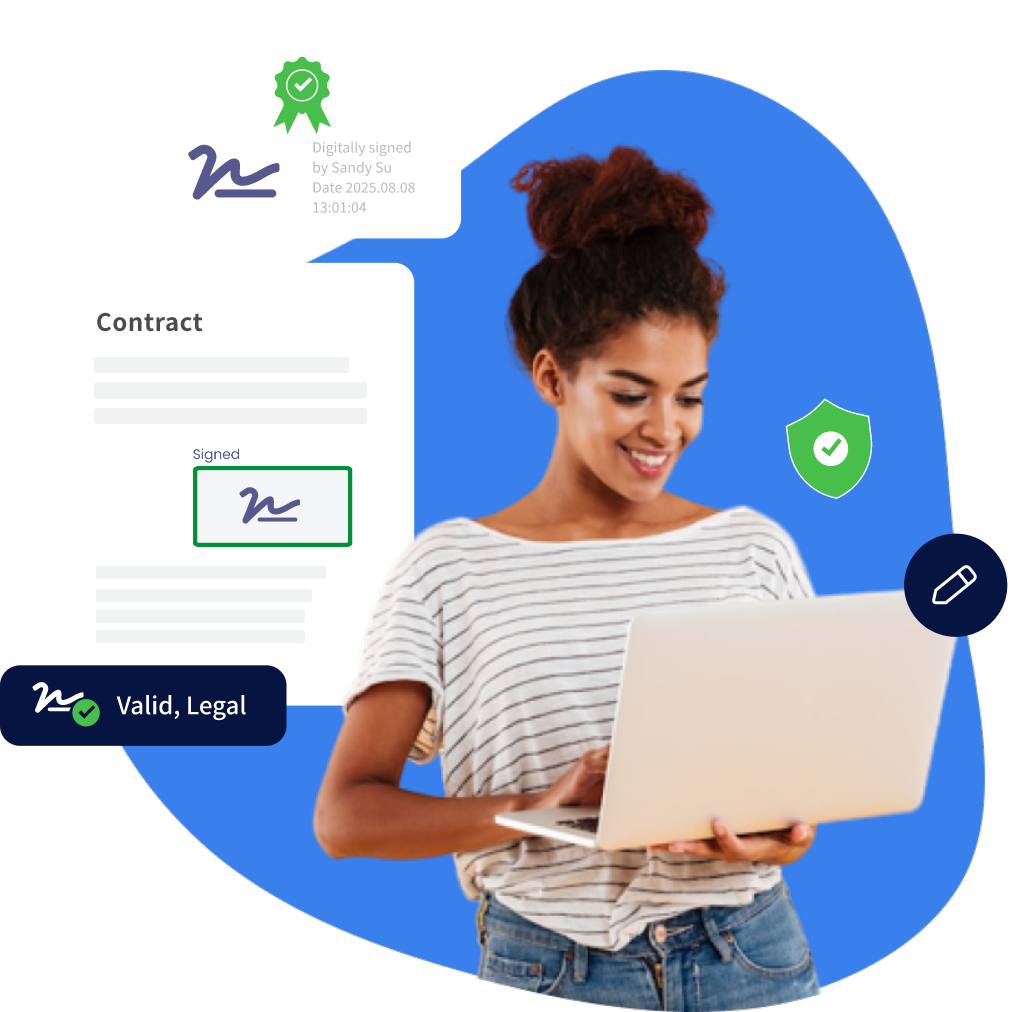
BreezySign Fully Compliant with Taiwan's Electronic Signature Law
Electronic Documents and Signatures in Taiwan Is Legally Equivalent to Physical Ones When Indivisible, Identity-Verified, and Authentic
In May 2024, Taiwan amended its laws to explicitly affirm that electronic documents and signatures meeting the criteria outlined in the Electronic Signature Act are functionally equivalent to physical documents and signatures. They cannot be denied legal validity solely because they are in electronic form.
If a counterparty does not explicitly object to using electronic documents or signatures, their consent to the electronic format is presumed. Even if the signing process switches to physical documents mid-way, any completed electronic signatures remain legally valid.
Legal Requirements for Valid Electronic Signatures
Indivisibility
An electronic signature must be attached to a specific document and cannot exist independently.
Identity Verification
The signer's identity and qualifications must be verifiable.
Document Authenticity
The electronic document must be protected against unauthorized alterations.
Digital Signatures: The Gold Standard for Legal Presumption of Authenticity
To presume a signature was personally signed by the individual, an electronic signature must be upgraded to a digital signature, which meets additional requirements under the Electronic Signature Act:
Advanced Identity Verification for Secure Signing with Multiple Authentication Methods
Set up OTP authentication via email or phone, ensuring that only authorized individuals with access to the code can sign.
Combine email or phone authentication with SMS or mobile OTP verification for added layers of security.
Support video recording during the signing process to capture the signer's physical characteristics, ensuring identity confirmation.
Digital Certificates issued by trusted, government-accredited Certification Authorities (e.g., Chunghwa Telecom, TWCA), these certificates act as a digital ID card endorsed by a recognized authority.
Verify Document Integrity Instantly with Adobe AATL
Real-Time Verification: Open signed PDFs with Adobe Reader or Adobe software to instantly verify the signer's identity and check if the document has been tampered with.
Global Recognition: Adobe AATL, a globally trusted framework, validates digital certificates to ensure they are trustworthy, non-expired, and included in a recognized trust list.
This framework establishes unparalleled credibility for digital signatures, offering peace of mind in both domestic and international transactions.
BreezySign: Cross-Border Legal Validity of Electronic Signatures
When Taiwanese businesses collaborate with international partners, it's crucial to ensure electronic signatures comply with both local laws and Taiwan's Electronic Signature Act. Key factors to consider include: